![i[n]solation](https://i-n-solation.de/wp-content/uploads/2026/07/Neue-Logo.jpg)
Dynamic thermal protection
for windows & façades
Flexible. Adaptive. Solar-active.
The I[n]solation system combines dynamic thermal protection with solar energy – for insulation, solar shading and thermal mass.
77.7%*
*Example calculation: Uw 2.8 W/m²K + FVS R 1.25 m²K/W
One principle. Four functions.
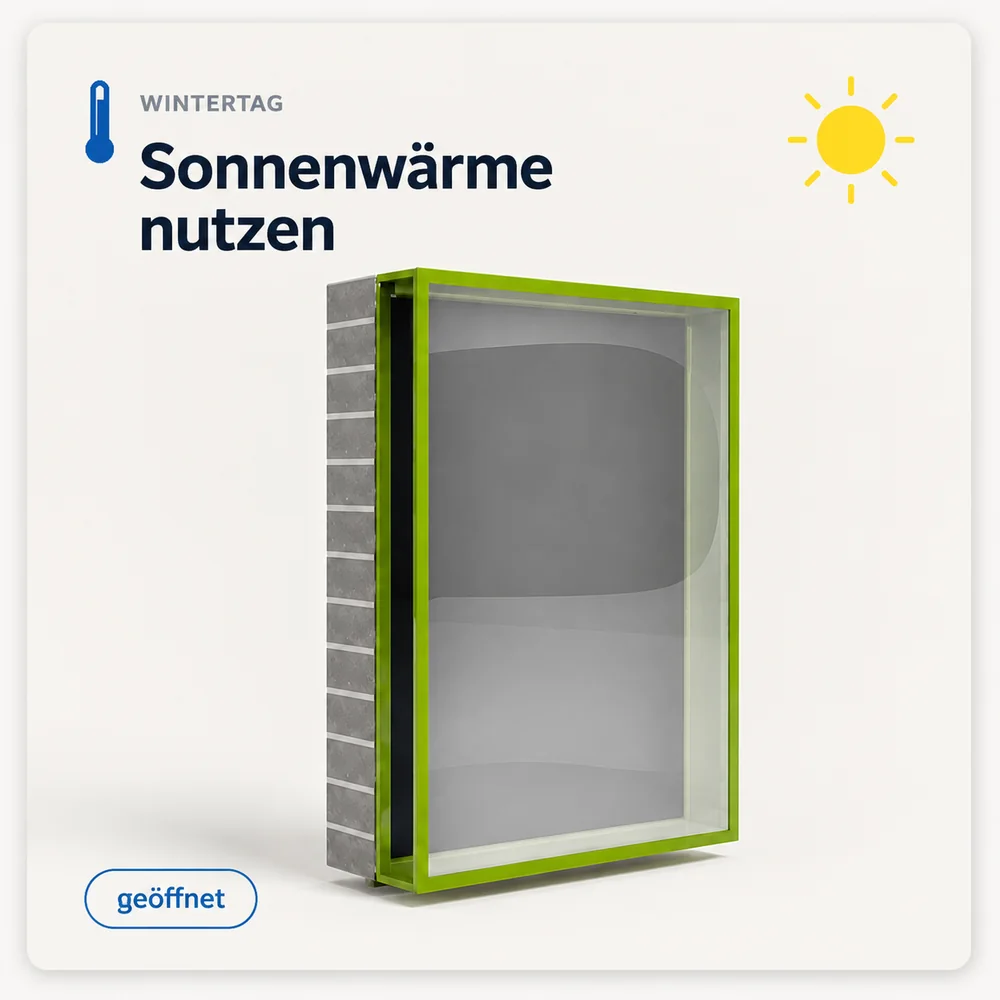
How the FVS works
A roll-up multilayer film system (FVS) for dynamic thermal protection
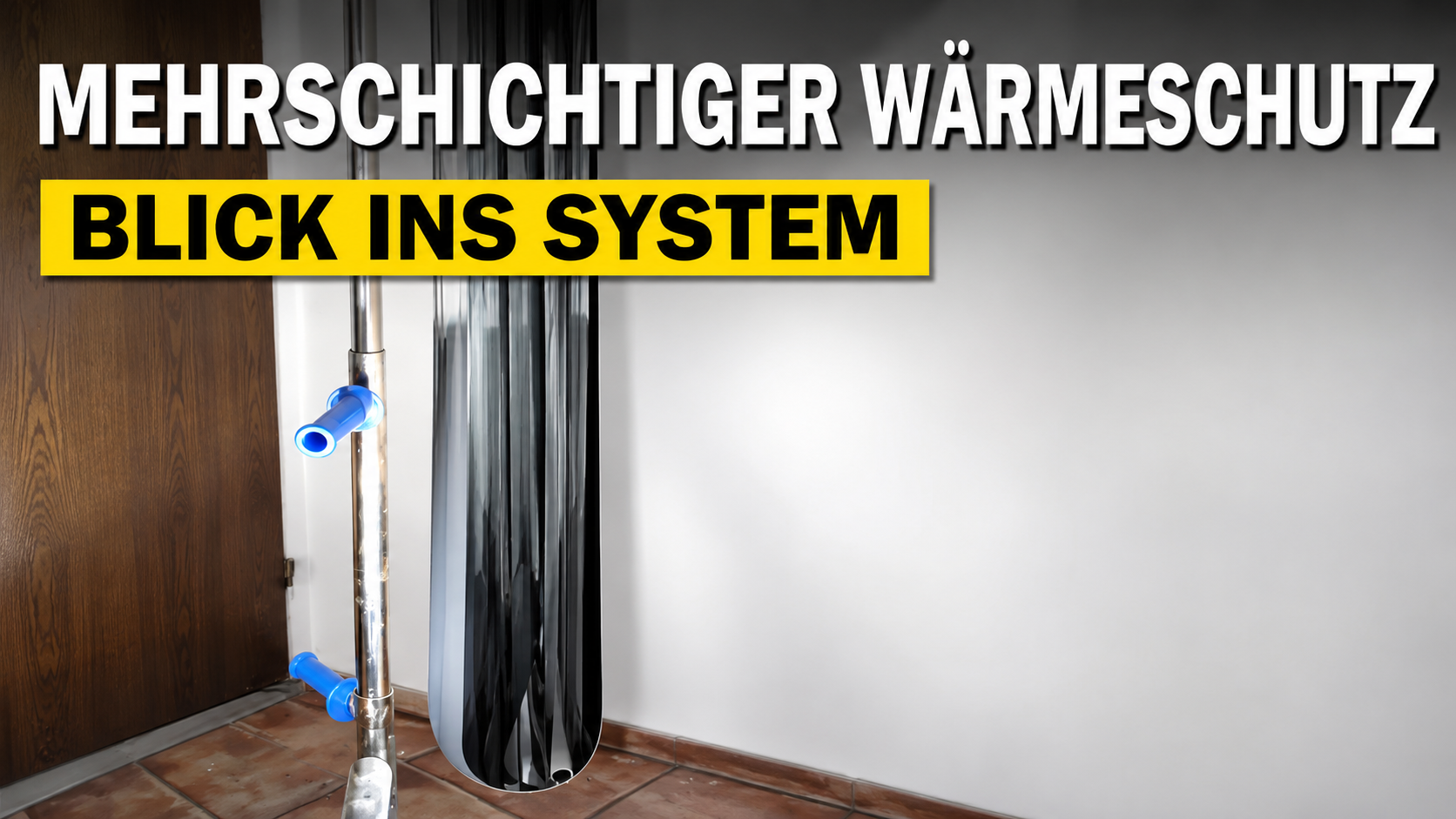
The FVS consists of several ultra-thin, heat-reflective films separated by defined air layers to form a lightweight multilayer system.
When closed, the films reduce heat transfer by radiation. The still air layers provide additional insulation. This creates effective thermal protection using very little material.
The key difference from static insulation is that the entire system can be rolled up. This allows the thermal protection to be opened or closed as needed – for solar gains, heat retention or solar shading.
The plus-energy window
The FVS turns a static window into an adaptive building component. When open, daylight and solar heat gains are preserved. When closed, an additional multilayer thermal barrier forms in front of the glazing and frame.
The compact system can be rolled up completely and disappears like a roller blind when not in use. This keeps the window fully usable.
Depending on the situation, the window can perform different functions: use solar heat, reduce heat losses or protect against overheating.
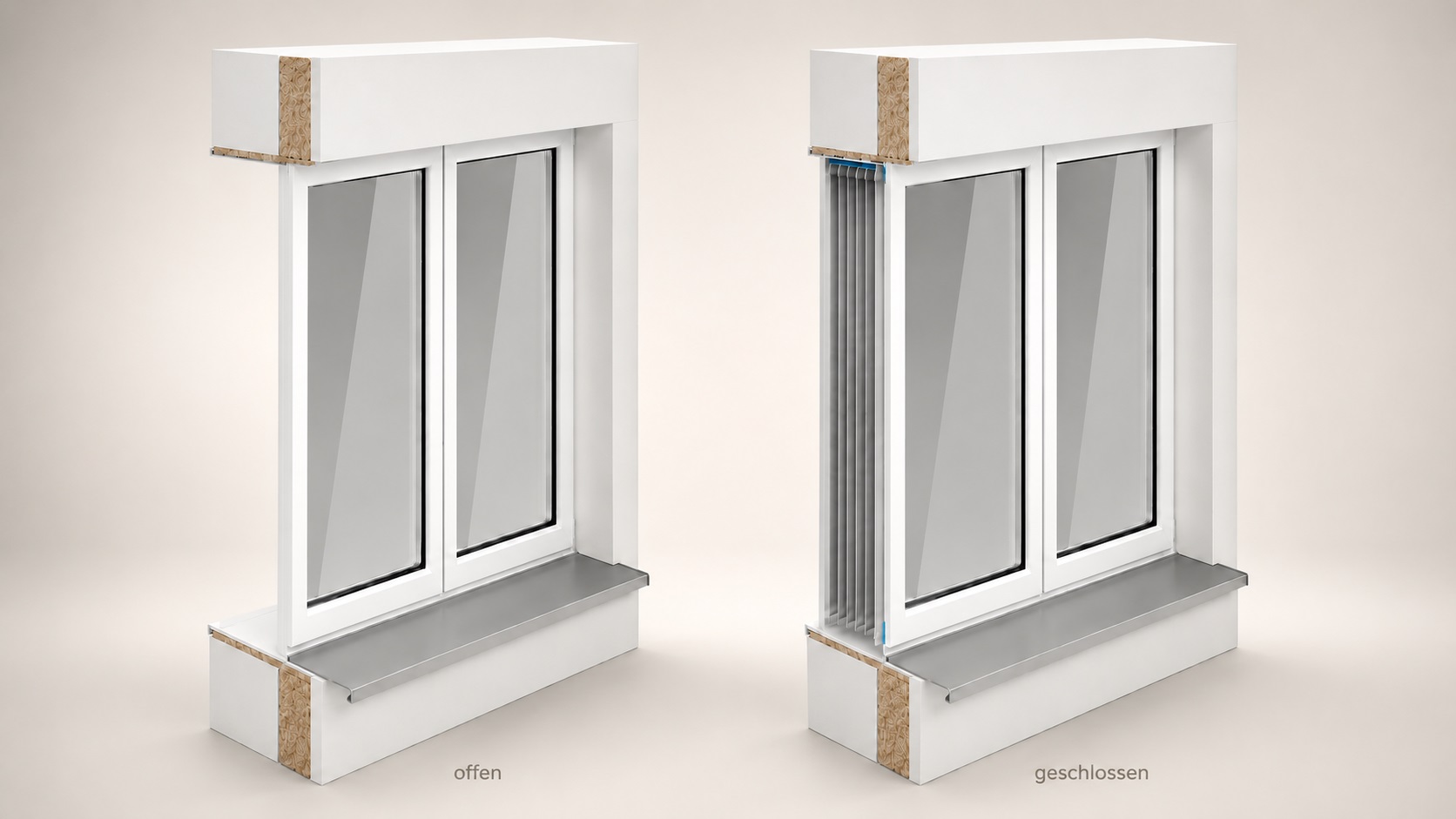
Simple installation on the window
Load external content from YouTube
The FVS is individually adapted to the existing window. After the dimensions have been taken, the compact system is pre-assembled and then installed directly in the window reveal.
Installation requires neither window replacement nor major intervention in the building structure. The finished module is inserted, aligned and secured.
Depending on the installation situation, fitting a prepared system takes around 10 to 15 minutes. This makes dynamic thermal protection quick and easy to retrofit.
Taking it further: the adaptive façade
With a window, solar heat enters the room directly. With a façade, however, the solid external wall itself can be used as a thermal store.
When the FVS is open, solar radiation reaches the wall. The building mass absorbs the heat, stores it and releases it to the interior with a time delay. When the FVS is closed, an additional thermal barrier forms in front of the wall, reducing heat loss to the outside.
In summer, the same system can protect the wall from direct solar radiation and support its cooling at night.
The principle can be transferred to modular façade elements that can be assembled dry and without permanent bonding. This application is the next development step of the FVS.
Less material. Greater impact.
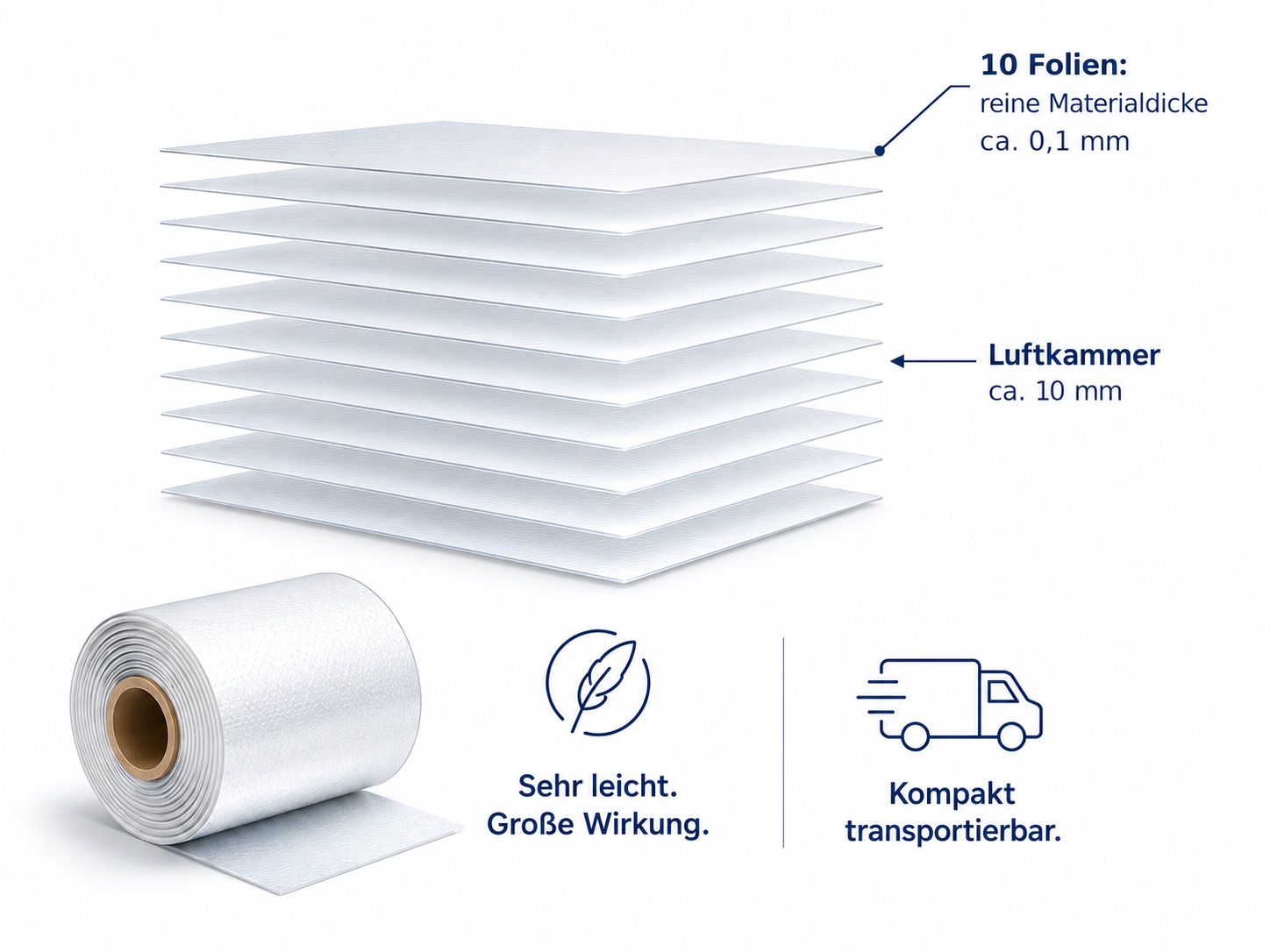
Dynamic thermal protection does not require massive layers of insulation.
Its effect is created by several ultra-thin films and the air chambers between them.
This keeps the system lightweight, compact and resource-efficient. The films can be processed from rolls, transported efficiently and installed with little effort.
The insulating effect is achieved not through mass, but through intelligent layering.
From development to series production
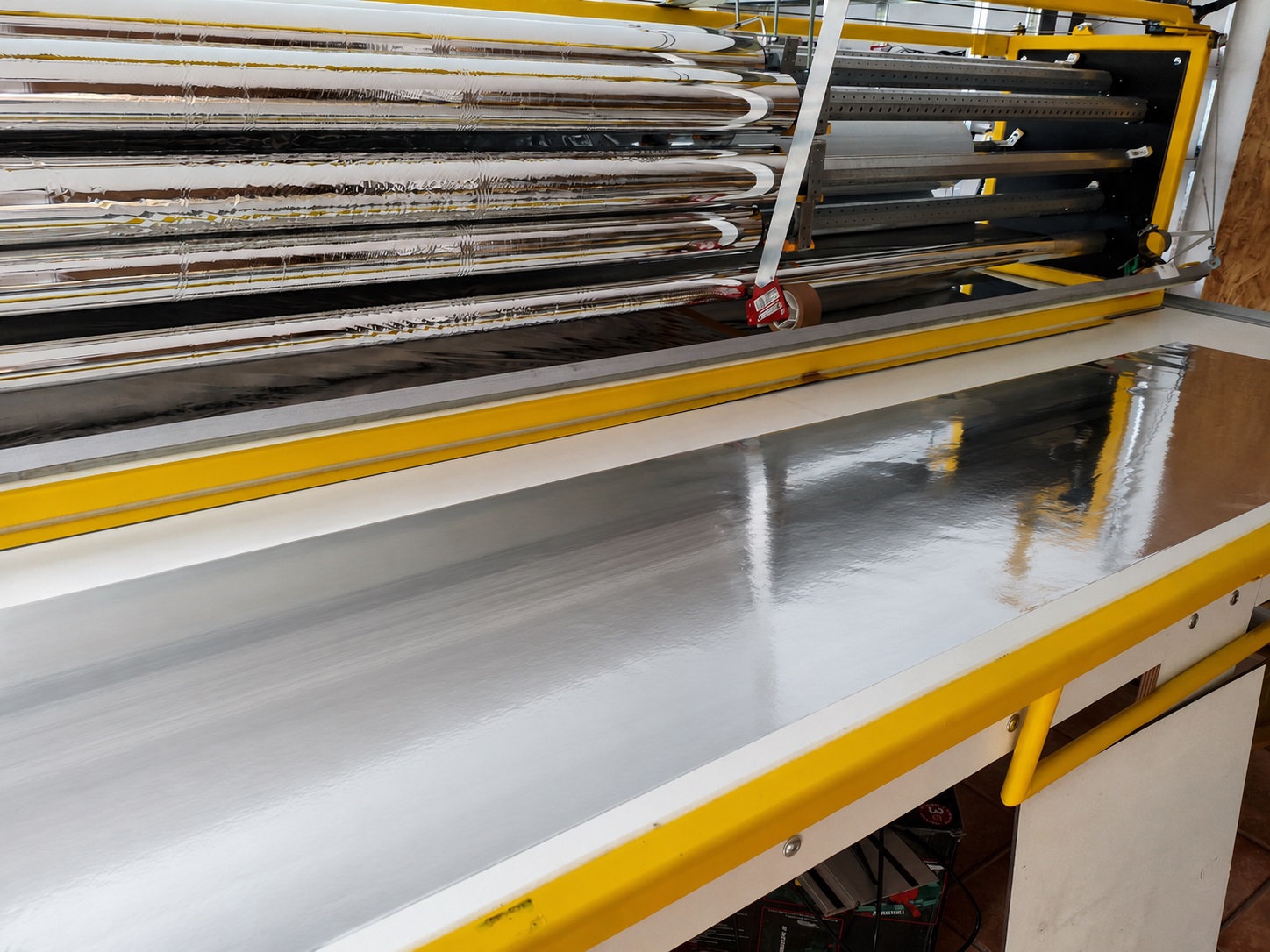
A dedicated production machine has been developed for manufacturing the dynamic thermal protection system.
With such a machine, the system can be produced locally and in different dimensions.
The principle is simple and compact and can be integrated into existing production facilities.
A fully functional setup already exists. The next step is further development towards a wider and automated series-production machine.
Companies interested in pilot projects, research institutes and other potential users are warmly invited to get in touch.